


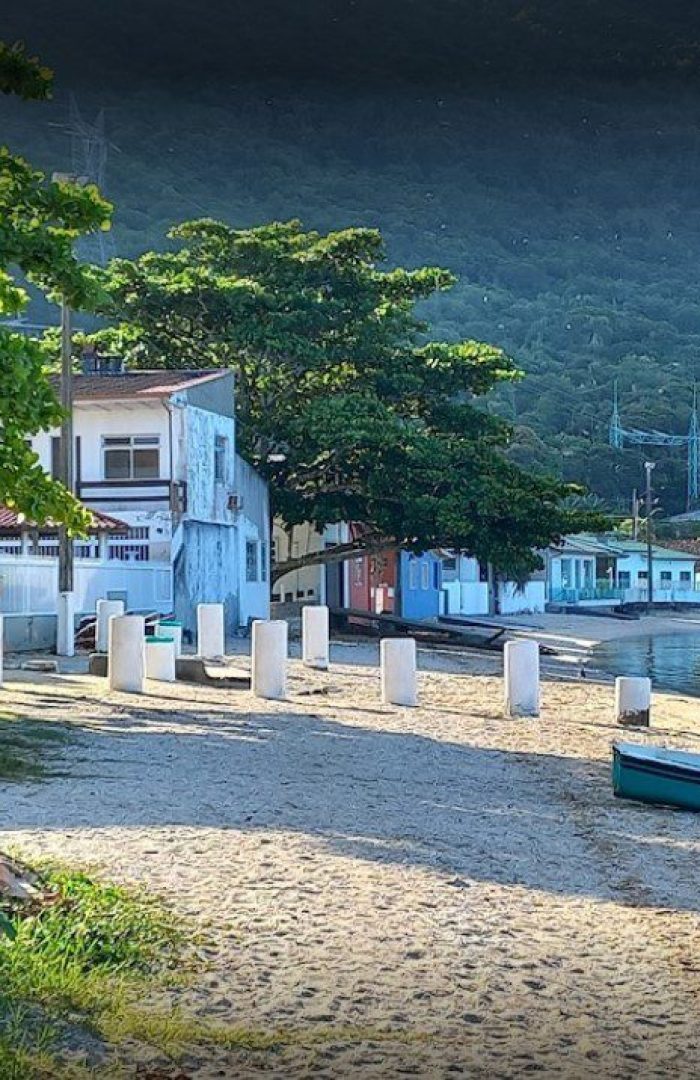
Tapera Beach is a hidden treasure in Florianópolis, located in the south next to Ribeirão da Ilha.
With an environmental preservation area surrounding it, the beach is a sanctuary for wildlife and a popular destination for those seeking tranquillity and contact with nature.
The infrastructure at Praia da Tapera is simple and unspoiled, with just a few bars in the vicinity.
The beach is accessible via a 20-minute trail from Praia da Solidão. The path is steep at some points, but rewards visitors with a breathtaking view of the sea and the Atlantic forest.
The sea of Tapera
The beach is only 520 meters long and has a narrow, thick strip of sand with a yellowish tinge.
Despite this, the waters are calm and warm, and on days with a southerly wind, the transparency is remarkable. However, the seabed is muddy and full of small shells.
This beach is known for its nearby islands and water leisure options. At low tide, you can walk along a narrow strip of sea bed to Dona Francisca Island.
Ilha das Laranjeiras, on the other hand, is a little further away and you'll need to use stand-up paddleboards, kayaks or hire a boat.
Fishermen on the beach can be contacted to arrange transportation.
Ilha de Laranjeiras and Dona Francisca

Ilha de Laranjeiras is a small island located on Tapera beach.
With an area of just 3 hectares, it is one of the main tourist attractions in the region due to its natural beauty. It is only accessible by boat, which makes it a quiet and secluded place.
The island got its name from the large number of orange fruit trees that were planted during the Portuguese colonization, making it a productive area for the island of Santa Catarina.
There is also a small white sand beach which is perfect for relaxing and enjoying the scenery.
In addition to its natural beauty, the island has an important historical significance for the region. During the Paraguayan War in 1865, the island served as a naval base for the Brazilian Navy.

Origin of the name Tapera
The name “Tapera” comes from the Tupi-Guarani word meaning “ruin” or “abandoned house”, which reinforces that the region was once inhabited by Tupi-Guarani Indians and Portuguese settlers.
The history of the beach dates back to the 18th century, when the area was occupied by Azoreans who settled in the region and dedicated themselves to agriculture and fishing, due to the development of the Parish of Nossa Senhora da Lapa do Ribeirão Grande
Tapera Beach is an environmental preservation area, protected by federal and state laws. The area is surrounded by dunes and Atlantic forest and is home to a rich fauna and flora.
The beach is known for the presence of sea turtles, which come to lay their eggs on its sands during spring and summer. The beach is also an important spot for watching migratory birds.

Air Base
After the creation of the Naval Aviation Center in 1923, Tapera began to develop more significantly.
The Florianópolis Air Base is located close to Tapera beach, which means that the site is frequently flown over by military aircraft, which can be seen while practicing nautical activities in the area.
In the 1970s, the Tapera neighborhood still had a few houses and a dirt road linking the area to the city. Over the years, the neighbourhood developed and urbanization arrived, bringing with it improvements in infrastructure and access to public services.
The neighborhood has a small chapel dedicated to St. Francis of Assisi, built by the region's former residents.
Sambaqui man in Tapera
During the archaeological excavations at the Tapera site, the remains of 172 individuals were found, 93 adults and 79 children.
The bodies were buried in shallow pits in the sand on the beach and accompanied by ornaments made from shells and animal teeth.
These archaeological finds reveal the presence of an ancient community that inhabited the region around 4,500 years ago.

Many of the pieces found at the Tapera site are currently on display at the Museum of Sambaqui Man in Florianópolis, which is an important reference in the study of sambaqui culture and the region's prehistory.
On this site you can get to know the list and more information on all Sambaquis of the Island
As we have seen, it is still possible to see traces of the neighborhood's history, such as archaeological sites and the presence of some fishing communities.
In short, Praia da Tapera is a haven for those seeking peace and quiet, away from the hustle and bustle of Florianópolis' most popular beaches. With its unspoiled nature and rich history, the beach is a treasure to be discovered by tourists and locals alike.
How to get to Tapera Beach
Tapera beach can be reached from the Gov. Aderbal Ramos da Silva highway.
The route follows the SC-405 highway to Av. Dep. Diomício Freitas/Rod. João Nilson Zunino.
Follow the signs, the route is usually well signposted.

By car
Tapera beach is in the south of Florianópolis Island, 23.1 km from the bridge and the center.
When you reach the Pedro Ivo bridge, go straight along the Gov. Gustavo Richard highway, second from the Gov. Aderbal Ramos da Silva highway.
Just follow the signs to the south of the island along Av. Dep. Diomício Freitas/Rod. João Nilson Zunino to Rod. Ac. ao Aeroporto in Campeche.
Take Rod. Aparício Ramos Cordeiro, R. José Olímpio da Silva and Rod. Açoriana to R. Bernardina Maria Lopes.
Buses
For those arriving by bus in Florianópolis, you should go to the Terminal Integrado do Centro (Ticen), which is 400m from the bus station.
Go to platform C, where the urban buses leave directly for Tapera via the Air Base or for the Rio Tavares Integrated Terminal (Tirio).
When you get to Tirio, you have to take another bus to Tapera beach or Ribeirão da Ilha.
You don't have to pay for a ticket again.
Uber, 99 or Taxi
Uber or a similar service to Tapera beach can cost around R$ 50 from the airport and R$ 75 from the bus station.
The price depends on the day, time and service offered.


 Português do Brasil
  English