

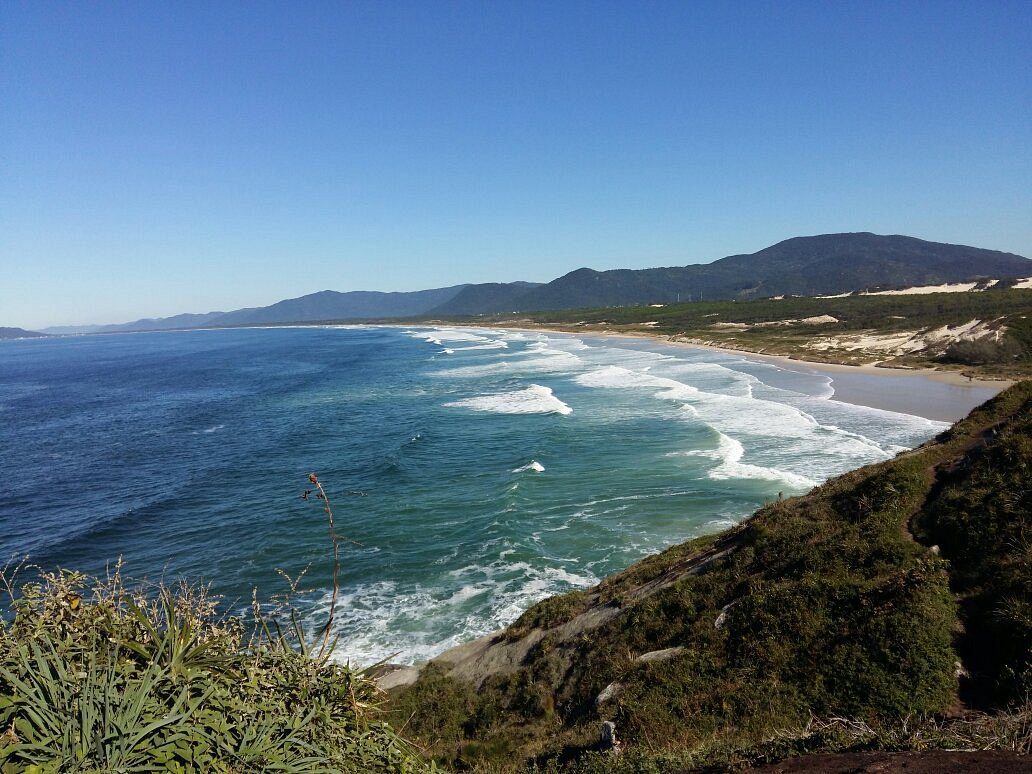
Praia do Moçambique is one of the longest beaches in Florianópolis, 7.5 km long.
Located in the eastern region of the island, it is considered one of the city's most unspoiled beaches, with a large part of its length forming part of the Rio Vermelho Forest Park.
This is a reserve of approximately 400,000 square meters that remains unchanged by the hand of man.
You can also find some accommodation options in the surrounding area, such as guesthouses and holiday homes.
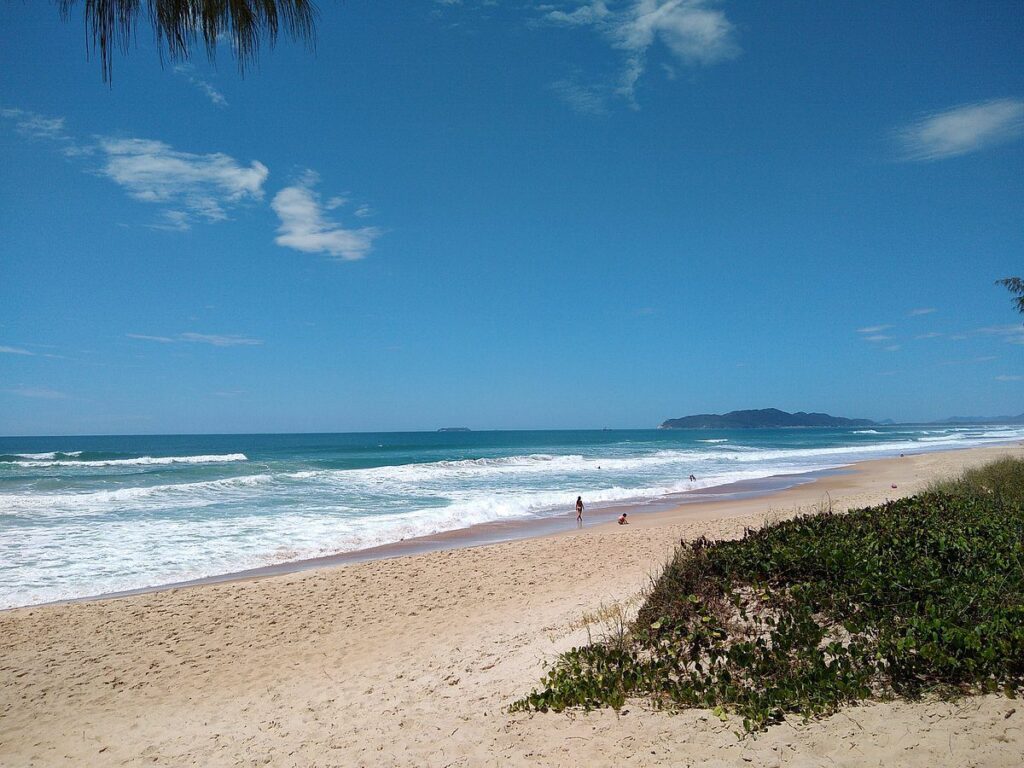
Mozambique Sea
With soft white sand, the sea is very rough, with strong waves, and is very popular with surfers and water sports enthusiasts.
The perfect combination of waves and tranquillity make Praia do Moçambique a must for surfers.
The sea, with its opening to the ocean, has a steep drop, which means that the depth increases abruptly after a few steps towards the sea.
However, you need to be careful when swimming, as contact with the current makes the water very cold and has an aggressive undertow, which is extremely dangerous.
The strip of sand is quite long and wide, with plenty of space for those who want to enjoy a day of sun and sea, but bring your parasol.
As it is a beach without much infrastructure, the flow of people is low, making it a perfect place for those looking for peace and quiet.
If you visit, take some snacks and water with you, it's a good tip!
History of Mozambique beach
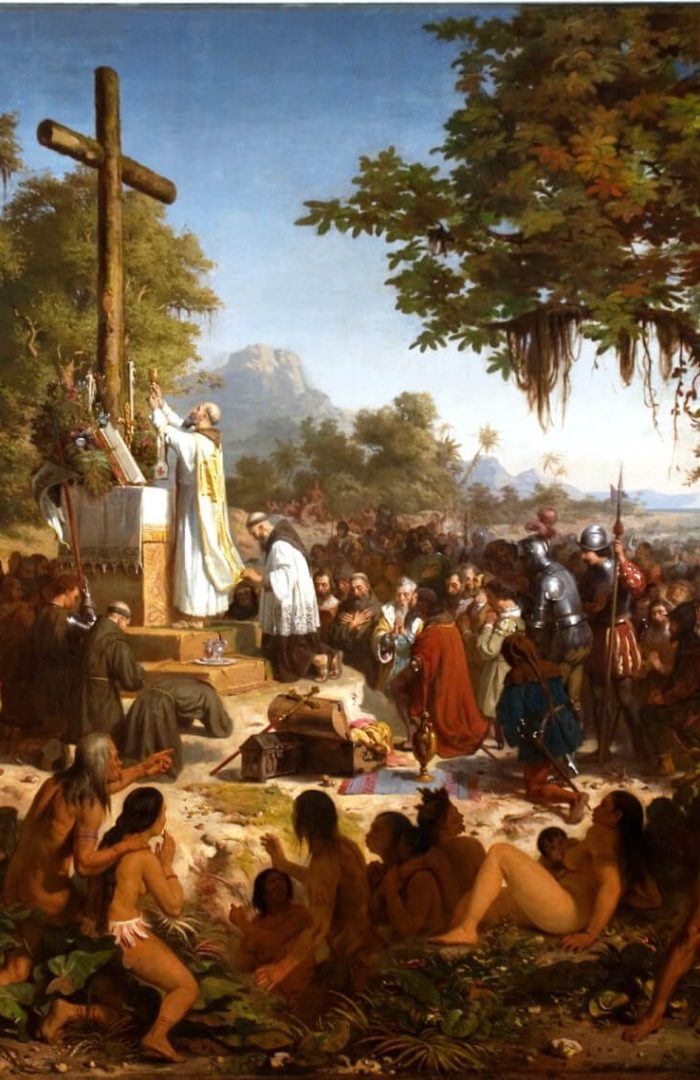
Praia do Moçambique has a rich history, dating back to the period when the Portuguese colonized the island of Santa Catarina.
At the time, the region was inhabited by the Carijós Indians, who were expelled by the colonizers.
The region was then used for raising cattle and planting corn and manioc.
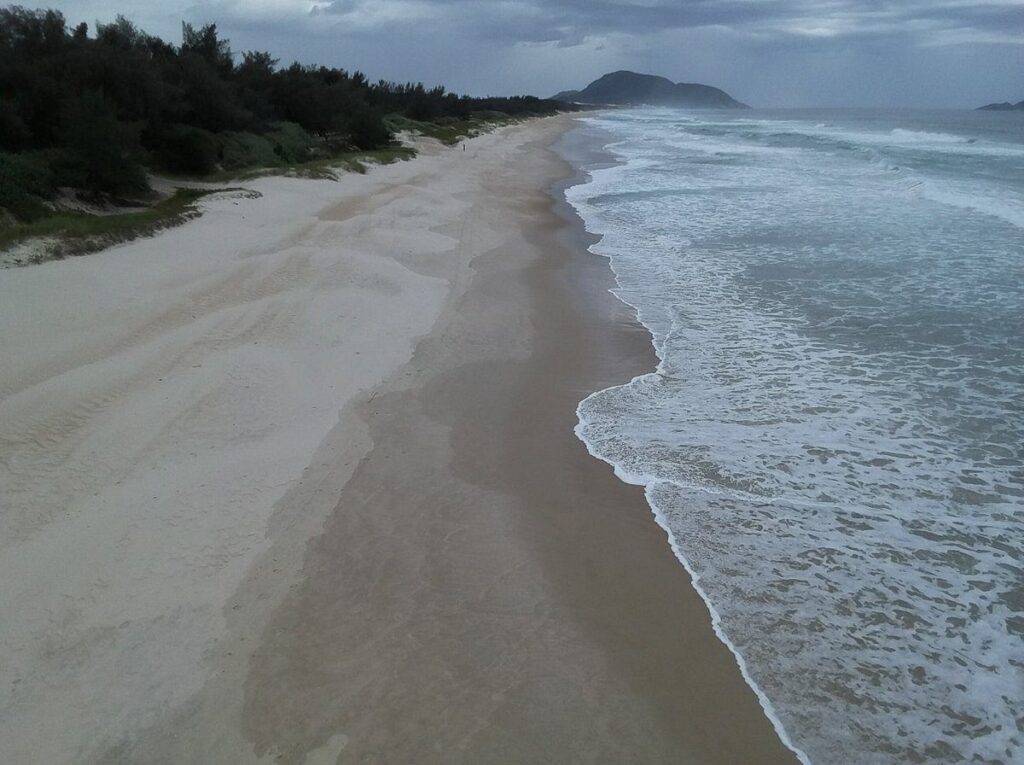
Origin of the name of Mozambique beach
Mozambique beach, located in Florianópolis, has a name that may have several origins, according to the Municipal Tourism Department (Setur).
One of the most widespread hypotheses is that the name comes from the Mozambique mollusc, which is very common in the region.
This small mollusc has an elongated shape and is edible, measuring around three centimeters.

Another possible origin of the name is linked to a type of indigenous people from the African region who inhabited the territories and gave rise to the Mozambican nation.
The third explanation for the name may be related to the story of the discoverer of Mozambique, Pedro Álvares Cabral.
Cabral went to Mozambique shortly after his stay in Brazil in 1500.
Therefore, the name of the beach in Santa Catarina may be related to this historical fact.
The beach has always offered excellent conditions for amateur fishing, with the possibility of finding spotted crabs, various fish and molluscs and excellent conditions for mullet nets and seines.
In order to protect the region's flat, sandy ecosystem, Dr. Henrique Berenhausen transformed the area with dunes into a dense forest reserve, using it as an experiment in the cultivation of various exotic species.
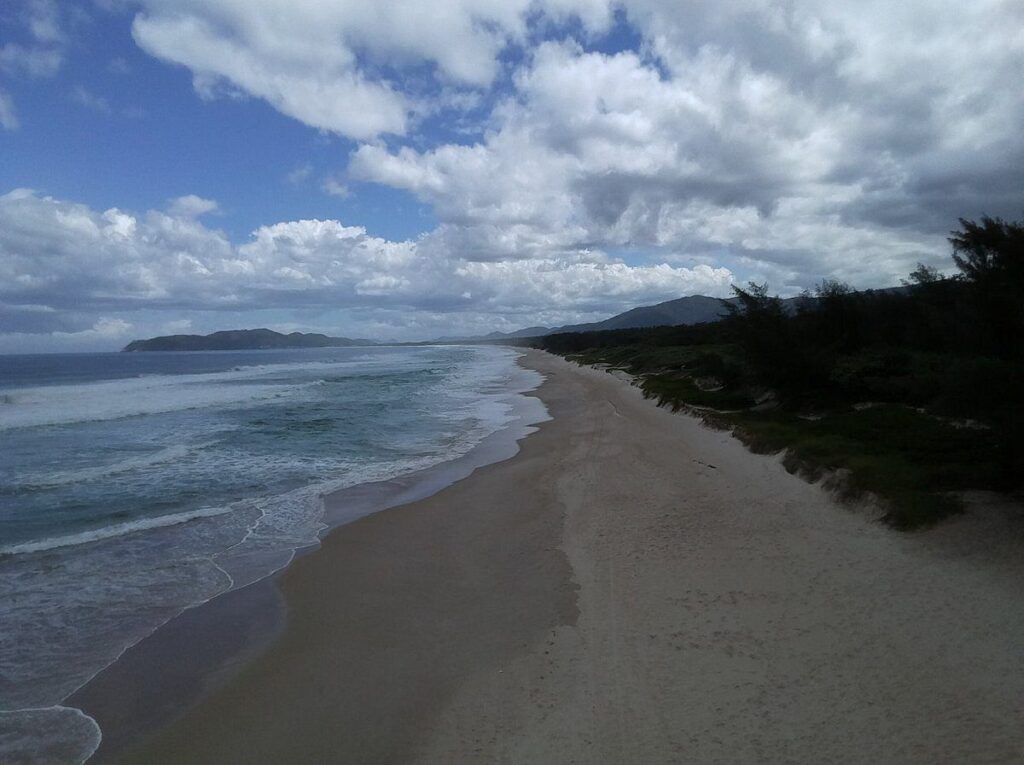
Film productions
Praia do Moçambique has been the setting for several film productions and has served as a location for national and international films and series.
The beach is also known for having hosted one of Florianópolis“ first music festivals, the ”Mocó Rock Festival", which brought together several independent bands in the 90s.
The 2015 film Amulet” is an example of this. The plot tells the story of a couple in crisis who decide to spend a weekend at Praia do Moçambique.
The film was shot entirely at Praia do Moçambique, taking advantage of the natural landscape and the unique atmosphere of the location to create a tense and claustrophobic atmosphere.
The cast also included renowned actors such as Maria Fernanda Cândido, Matheus Nachtergaele and Bruna Linzmeyer.
The film was selected for several film festivals, such as the Rio Film Festival and the Gramado Film Festival, and won awards in categories such as Best Supporting Actress (for Maria Fernanda Cândido) and Best Soundtrack.
With its natural beauty and peaceful atmosphere, Praia do Moçambique is an option for those who want to get away from the busiest beaches in Florianópolis and enjoy a day of sun and sea in a preserved and peaceful location.
How to get to Praia do Moçambique
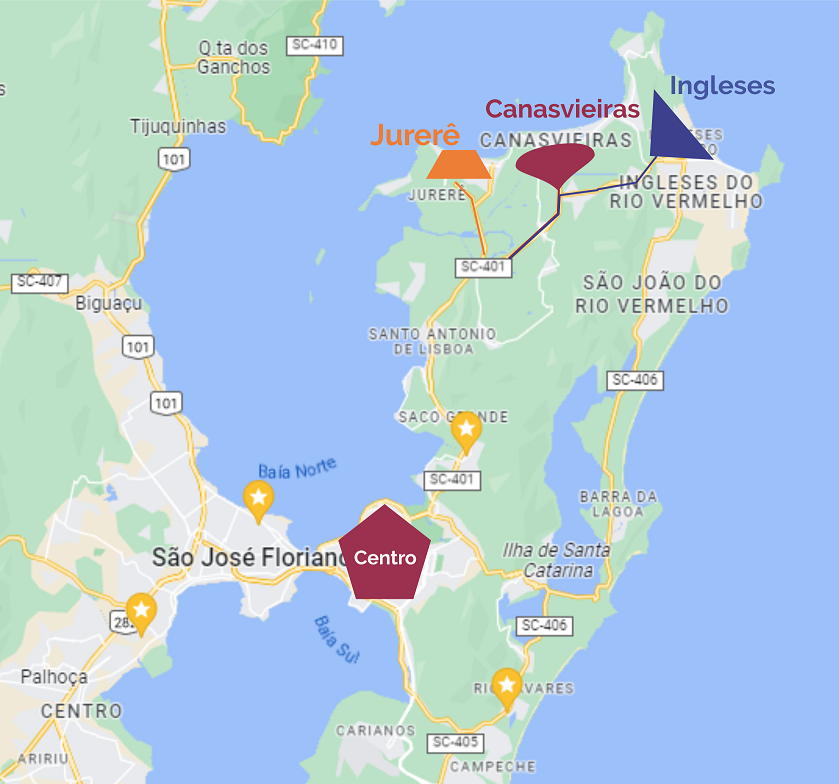
To get to Praia do Moçambique, which is 37 kilometers from the center, access is via Avenida Beira-Mar Norte.
There are two routes to this stop, one through the north of the island and the other through the lagoon.
Follow the signs, the route is usually well signposted.
By car
Praia do Moçambique is in the northeast of Florianópolis Island, 37 km from the bridge and the center.
Once over the bridge, stay in one of the two right-hand lanes, heading towards Avenida Beira Mar and Avenida da Saudade.
I walk north:
Just follow the signs towards the north of the island and take the SC-401. Further on there will be a fork on the right, taking the SC-403 to Ingleses beach.
Take the João Gualberto Soares highway to Moçambique beach.
Walking along the lagoon.
Just follow the signs towards the lagoon and take Rodovia Admar Gonzaga, Av. Afonso Delambert Neto and Av. Rendeiras and Jornalista Manoel de Menezes.
Take the João Gualberto Soares highway to Moçambique beach.
Buses
For those arriving by bus in Florianópolis, you should go to the Terminal Integrado do Centro (Ticen), which is 400m from the bus station.
Go to platform C, where the urban buses leave for the Canasvieiras Integrated Terminal (Tican).
When you arrive at the Tican, you have to take another bus to the Mozambique stop. You don't have to pay for a ticket again.
Uber, 99 or Taxi
Uber or a similar service to Mozambique beach can cost around R$ 150 from the airport and R$ 100 from the bus station.
The price depends on the day, time and service offered.

 Português do Brasil
  English