

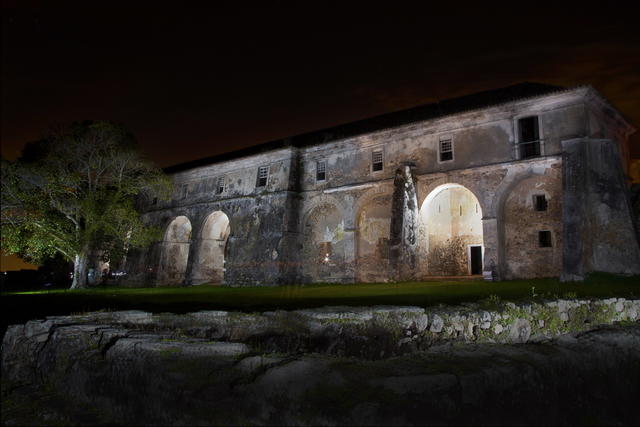
Fortresses on the island of Santa Catarina: Every stone, every wall and every internal space obeyed the constructions of a precise military logic, designed to resist attacks, guarantee control of the territory and allow the survival of those who lived there.
Despite being at different points on the island, the Fortresses as Anhatomirim, Ponta Grossa, Ratones and Santa Barbara, these fortifications share architectural and functional elements in common, inherited from Portuguese military engineering in the 18th century.
These are structures that repeat themselves, adapt to the terrain and reveal how day-to-day life worked within these defensive complexes that are now under threat. care of the Federal University of Santa Catarina.
More than historical ruins, these buildings form an integrated system: defense, command, supply, faith and culture, all organized within the walls.
Below, you'll learn about the main constructions found in the fortresses of Santa Catarina Island, with reference to the Fortress of São José da Ponta Grossa, one of the most complete examples of this architectural and military model.
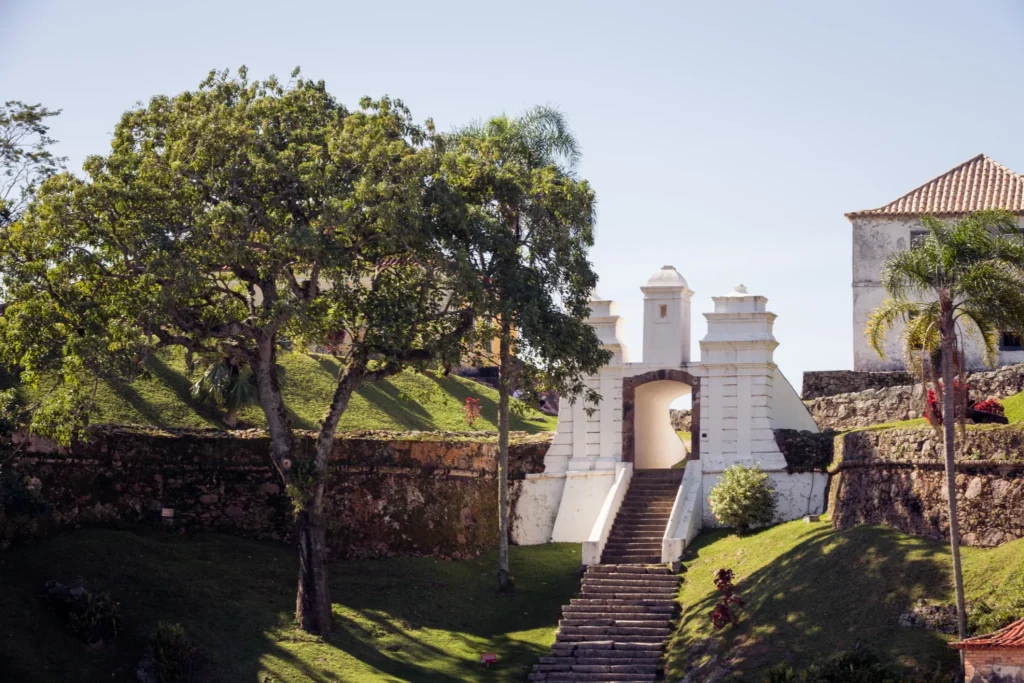
Fortress Gate
The first impression comes from Shutter, The eastern-influenced gateway marks the main access to the fortress. Visitors arrive via a lioz staircase, a rare type of limestone extracted in Portugal and brought to Brazil as ship ballast.
This detail reveals the strategic importance of the fortification and the sophistication of its construction elements.
Fortresses and the military and defensive structure
The fortress was organized around strategic defense points:
Bateria de São Caetano
A small auxiliary fortification built to reinforce the security of the eastern sector of the complex. It functioned as tactical support in the event of an attack from the sea.
Low battery
Positioned close to the waterline, it allowed direct fire at enemy vessels.
Cannons and Crossfire
Distributed along the walls, the cannons created crossfire zones, a strategy that made any hostile approach difficult.
Guarita and Dungeon
The guardhouse served as a surveillance point, while the dungeon was used to keep prisoners and offenders in custody.
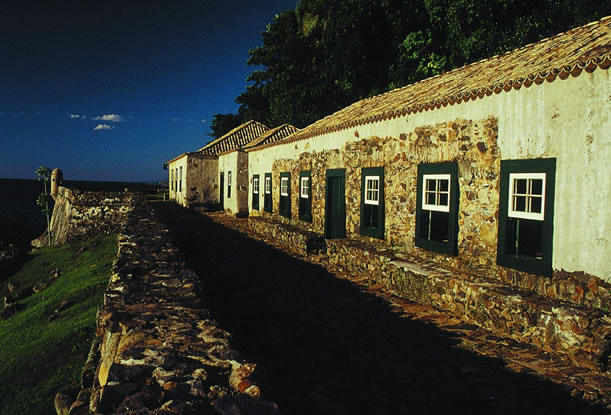
Command and survival spaces
Commander's House
A two-storey townhouse that also houses, in a curious way, the Gunpowder magazine.
Gunpowder magazine
In addition to its original function of storing ammunition, today it houses a photographic exhibition on the process of restoring the fortress, showing the recovery of heritage over the decades.
Troop barracks
Where the soldiers used to sleep and organize themselves, there is now a cultural space. The place is home to lace makers who produce and sell bobbin lace, and connecting the military past to the Azorean tradition that still survives on the island.
Religious and support spaces
Chapel of St. Joseph
It was first building restored by UFSC in the complex. The chapel continues to be used by the local community, keeping the relationship between heritage and faith alive.
Water Fountain
The supply came from a fountain outside the walls, This guarantees drinking water even during times of siege.
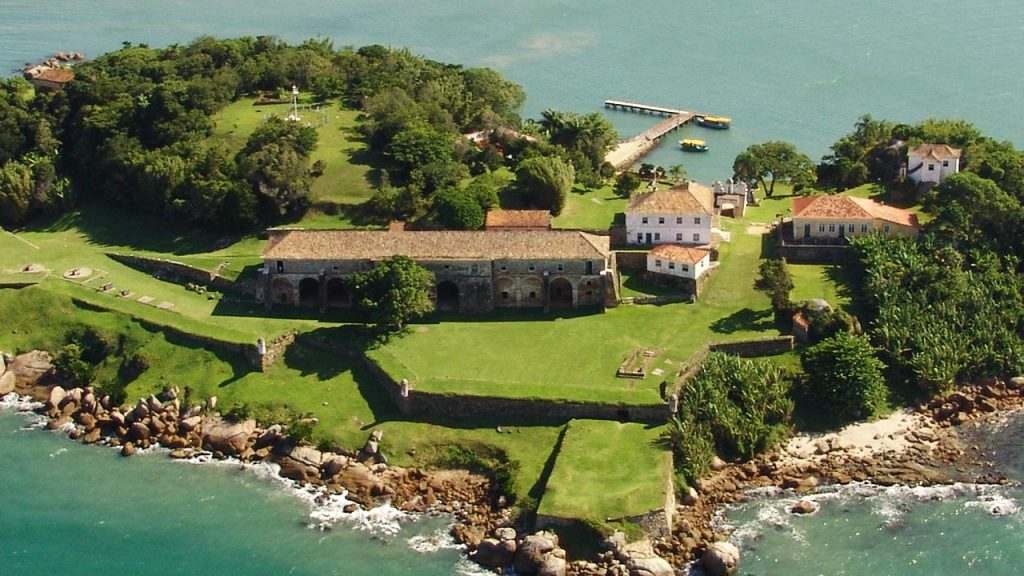
The complex's historic infrastructure
In addition to the main areas, visitors will find:
- Access via mooring and pier
- Box Office
- Armazém da Praia (snack bar and souvenir store)
- Lioz Staircase
- Shutter
- Gunpowder magazine (exhibition room)
- Remains of the old chapel
- Commandant's House (exhibition room)
- House of Flour
- Low battery
- Dungeon
- Guarita
- Porches
- Cannons
- Crossfire
- Water Fountain
- Troop barracks (exhibition room)
- Hanging Tree
- Radiotelegraph station
- Power Plant
- New Gunpowder magazine
A living heritage
The Fortresses bear witness to the formation and colonization of the island, the Portuguese military strategy, cultural resistance and the transformation of war spaces into places of memory, art and identity.
Between walls, cannons and bobbin lace, the fortress remains one of the greatest symbols of Florianópolis' history, where the past still echoes in the wind that blows off the sea.

 Português do Brasil
  English