

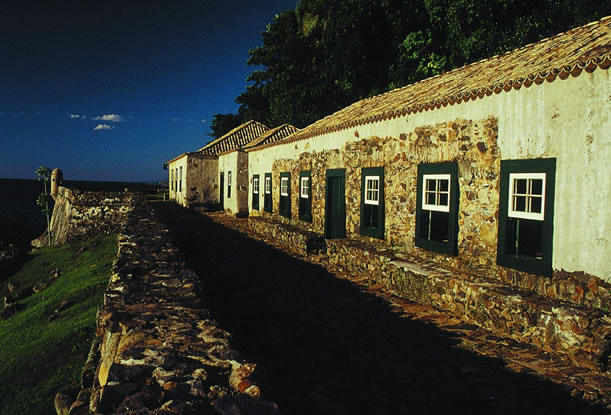
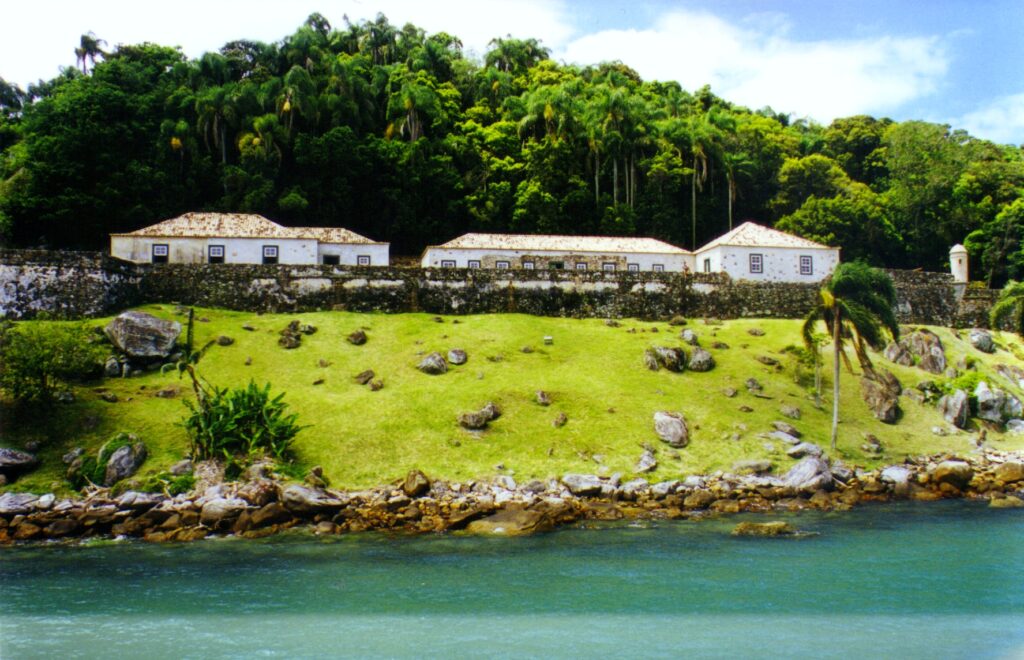
The Fortress of Santo Antônio de Ratones completes the defensive triangle of Santa Catarina Island planned by Brigadier José da Silva Paes.
In 1740, on the island of Ratones Grande, in the middle of the North Bay of the island of Santa Catarina, the building was completed four years later.
A curious fact is that the island of Ratones Grande was named by the Spanish explorer Cabeza de Vaca because the shape of the place from afar resembled a rat.
Next to it, another smaller island is called Ratones Pequeno.
The fort is the third point in the defensive triangle in the north of the island.
Integrating fortifications of Anhatomirim, Ponta Grossa and now Ratones, which were strategically designed to be able to cross cannon fire and protect the bay from invading Spanish ships.
Fortaleza's differentials of Santo Antonio de Ratones
The main buildings of the project are located on the same embankment. At the time, it was common to have three embankments to improve the combat strategy.
Its main buildings are the Gate, the Water Fountain and the Aqueduct.
Ratones Island is a paradise cut out by a 1,075-meter-long Ecological Trail with viewpoints and signposts. Take the opportunity to get to know the local fauna and flora.
It was only possible to build a fortress where there was a water source, but it was below sea level. You can find out more here: https://fortalezas.ufsc.br/
Shots fired in vain from the Fortress of Santo Antonio de Ratones
According to reports during the Spanish invasion of 1777, Four shots were fired from the fort at the enemy squadron. But it was in vain, as the island was taken without much resistance.
When the Spanish returned the island to the Portuguese Crown through the Treaty of Idelfonso, The fortresses fell into disrepute and were practically abandoned.
Ratones will only be used again in 1893 during the Federalist Revolution, when rebels opposed to the government of Floriano Peixoto used the facilities as a shelter.
After expelling the rebels, the island was handed over to the Brazilian Navy.
Exile from disease like cholera and coal
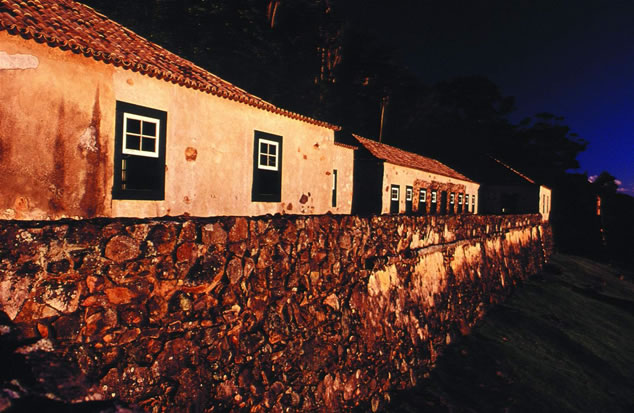
In turn, the Navy used the island as a Lazareto - a place where people with contagious diseases such as cholera and leprosy were sheltered - and remained so until the 20th century. The site also served as a coal depot.
When the restoration began, they found two human bones behind the officers' barracks.
Archaeological investigations have identified the bones of twelve burials that took place while it was used as a lazaretto for cholera sufferers.
Restoration of Ratones Fort
The restoration process sought to reconstruct the volumetry of the buildings, their original spans and roofs, preserving remaining elements and the marks of the interventions that took place throughout their history.
The techniques and materials used in the reconstruction are evident, and the visitor can discern between the original and the restored.
The ingenuity of the Water fountain, aqueduct that connects the roofs of the Commandant's House and barracks, and the Portada with your dry pit, on which an old drawbridge guarded the entrance to the fortification.
All the buildings and walls were built with stone masonry (granite extracted from the island of Ratones itself), and were originally covered with lime and sand plaster. The lime was produced from mollusc shells, which were abundant in the region
On the north side of the fortification, formed by a curved wall - the shape of which helped to repel enemy fire.
Cannon batteries
The place had two cannon batteries - one to the northeast and the other to the southwest - reinforcing their strategic role in the defense of the region. The main one, located to the northeast, originally had 14 bronze and cast iron artillery pieces.
Today, only four cannons remain, with a British model standing out Whitworth of the 19th century, now positioned in the port, and which at the time was one of the largest cannons in Brazil.

 Português do Brasil
  English